


Pearls stand apart from other gems because they grow inside living organisms. This biological origin gives them a unique nacre structure that makes them inherently more vulnerable than crystalline gemstones like diamonds or sapphires. Many owners inadvertently degrade the luster and structural integrity of their jewelry through routine daily habits. Spraying perfume, applying lotion, or simply wearing a pearl ring while typing can lead to irreversible damage and a complete loss of investment value. Understanding the specific chemical and physical vulnerabilities of Freshwater Pearls allows you to implement evidence-based care protocols. By learning exactly how nacre reacts to environmental stressors, you can make informed decisions about daily wear, proper storage, and when to evaluate a piece for professional repair versus total replacement.
Chemical Sensitivity: Freshwater pearls are highly porous and react destructively to acidic compounds found in everyday cosmetics, sunblocks, perfumes, and even human perspiration.
Treatment Vulnerability: Many freshwater pearls undergo bleaching or dyeing processes; these artificial enhancements are highly susceptible to chemical stripping and UV fading.
Physical Vulnerability: Ranking low on the Mohs hardness scale (2.5 to 3.0), pearls are highly susceptible to surface abrasions, impact fractures, and loose mountings from daily bumps.
Proactive Mitigation: Adopting the "last on, first off" wearing protocol and utilizing dedicated, non-abrasive storage are non-negotiable requirements for preserving pearl integrity.
Table of Contents
Defining the biological composition of pearls establishes exactly why they require specialized care compared to synthetic or mineral-based jewelry. Their organic origin dictates their physical limitations and dictates how you must handle them.
Pearls consist of microscopic aragonite platelets bound together by an organic glue called conchiolin. This specific crystalline structure creates the signature luster and iridescence associated with high-quality gems. However, the primary component is calcium carbonate. Calcium carbonate is highly porous and acts like a microscopic sponge for external substances. It absorbs harmful compounds deeply into the pearl structure. When acids or oils penetrate these pores, they cause cellular-level degradation that you cannot simply polish away. The conchiolin layer also requires a specific moisture balance to remain flexible. If it dries out, the entire structure becomes brittle and prone to shattering under minimal pressure.

Gemologists use the Mohs hardness scale to measure a material's resistance to scratching. On this scale, pearls rank between 2.5 and 3.0. Contrast this against common gemstones like diamonds at 10, sapphires at 9, or even everyday metals like steel and gold. This exceptionally low hardness establishes a severe baseline risk for scratching and surface erosion during routine wear. Simply rubbing a pearl against a metal clasp, a harder stone, or even a rough fabric will permanently scar the nacre. You must understand that pearls are softer than a copper penny and softer than glass. This physical reality means you cannot treat them like standard metal jewelry.
Material | Mohs Hardness Rating | Risk to Pearls |
|---|---|---|
Diamond | 10.0 | Extreme. Will gouge nacre instantly upon contact. |
Sapphire / Ruby | 9.0 | Extreme. Causes deep scratches and surface erosion. |
Quartz (Dust/Sand) | 7.0 | High. Airborne dust can cause micro-abrasions over time. |
Gold / Platinum | 2.5 - 4.5 | Moderate to High. Metal clasps and adjacent rings will wear down nacre. |
Freshwater Pearl | 2.5 - 3.0 | Baseline. Vulnerable to almost all other jewelry materials. |
Fingernail | 2.5 | Low. Can occasionally scratch very soft or degraded nacre. |
Modern pearl farming frequently utilizes industry-standard treatments to alter the final appearance of the harvest. Processors use bleaching techniques to uniformize white pearls, removing natural dark spots or uneven undertones. They also use organic and synthetic dyes to create intense pinks, purples, blacks, or metallic hues that do not occur naturally. Chemical exposure and prolonged UV light damage the raw nacre while simultaneously stripping, fading, or unevenly discoloring these artificial treatments. If you leave a dyed black pearl in direct sunlight, the UV radiation breaks down the dye molecules, turning the gem a muddy brown or dull gray. Once the dye breaks down or the bleach weakens the outer aragonite layers, the pearl loses its aesthetic value entirely. You cannot re-dye a mounted pearl successfully.
Specific chemical agents dissolve nacre, strip color treatments, and alter the optical properties of the pearl. Identifying these agents is the first step in preventing irreversible damage to your collection.
Chemical reactions between alcohol, synthetic fragrances, aerosol propellants, and pearl surfaces cause immediate dulling. When you spray perfume or hairspray, the fine mist settles on the pearl. The alcohol acts as a solvent, eating into the conchiolin and breaking down the surface luster. Oil-rich emulsions like sunblocks and body lotions cause a different type of damage. They clog the microscopic pores of the nacre, trapping airborne dirt and accelerating erosion. The oils create a sticky film that dulls the iridescence and attracts abrasive dust particles.
To prevent this, you must adopt strict wearing habits:
Shower and dry your skin completely.
Apply all lotions, sunblocks, and body oils.
Apply makeup and style your hair using any aerosol products.
Wait at least 15 to 20 minutes for all chemical products to dry and absorb into the skin.
Put your pearls on as the absolute final step before leaving the house.
Human sweat has an acidic pH, typically ranging from 4.5 to 7.0. Oily skin secretions cause cumulative corrosive damage to the calcium carbonate layers over time. This biological exposure slowly eats away the outer nacre, leaving a chalky, lifeless surface. If you wear a pearl necklace during a hot summer day or while dancing at an event, your sweat coats the gems in a mild acid bath. Wiping pearls with a damp, soft cloth immediately after skin contact neutralizes skin acidity and removes destructive biological oils. If you skip this step and put the necklace directly back into a jewelry box, the acids continue to etch the surface while in storage.
Chlorine, bleach, and ammonia-based household cleaning solutions cause catastrophic, immediate structural damage to nacre. Never wear pearls in swimming pools, hot tubs, or during household chores. A single splash of harsh window cleaner or bathroom bleach can dissolve the outer layers of the pearl in seconds. This leaves irreversible pitting, white spots, and severe discoloration. Even the fumes from heavy ammonia cleaners can degrade the luster if the pearls sit exposed on a bathroom counter. If you are doing dishes, scrubbing floors, or doing laundry, take your rings and bracelets off and store them in a safe room.
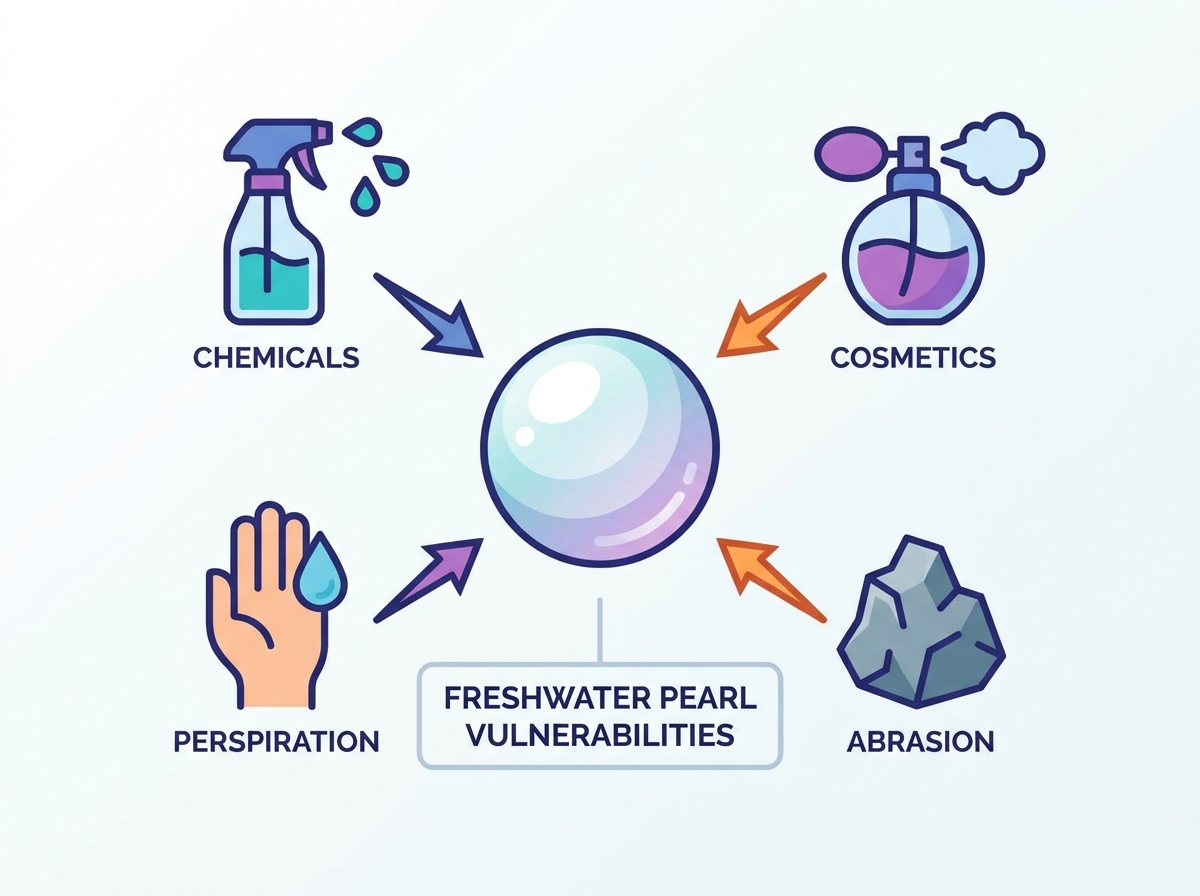
Physical hazards and environmental conditions routinely compromise pearl durability. Proper handling and situational awareness mitigate these risks and prevent accidental destruction.
Storing pearls in mixed jewelry boxes creates severe friction risks. When they rub against diamonds, sapphires, or metal clasps, the softer nacre scratches instantly. Tossing a pearl pendant into a dish with metal chains guarantees surface damage. Wiping pearls with rough fabrics, paper towels, or dry tissues causes micro-abrasions. Paper products contain wood fibers that act like fine sandpaper against calcium carbonate. Always use specialized, lint-free cloths for maintenance and isolate your pearls from all other jewelry.
Blunt-force trauma poses a high risk, particularly for pearl rings exposed to daily activities. Typing on a keyboard, opening heavy doors, or accidentally hitting your hand against a steering wheel subjects the pearl to significant shock. A strong bump can cause solid nacre to chip or separate from the nucleus. Physical impacts also bend mounting posts and break down specialized jewelry adhesives. Most pearl rings use a small metal peg and jeweler's epoxy to hold the gem in place. Hitting the pearl weakens this epoxy bond, leading to the pearl falling out of its setting entirely and rolling away.
The conchiolin layer requires a specific moisture content to remain resilient. Prolonged exposure to direct sunlight, radiators, or airtight, zero-humidity environments causes severe dehydration. Storing pearls in a bank safety deposit box for years is a common mistake. These vaults use dehumidifiers to protect paper documents, which actively sucks the moisture out of the pearls. This lack of moisture leads to yellowing, brittleness, and micro-cracking across the pearl's surface. Once a pearl cracks from dehydration, you cannot repair it.
Evaluating the current condition of a pearl determines if professional intervention is necessary or if the piece has reached the end of its wearable lifespan. You need to know what you can fix and what you must discard.
Inherent growth characteristics, such as dimples, rings, and spots formed during cultivation, are natural and do not affect structural integrity. These are birthmarks of the gem. Acquired damage presents as dulling, a chalky appearance, or peeling nacre layers. Peeling indicates severe structural failure where the aragonite layers are actively separating from each other. If a pearl looks like an onion losing its skin, the damage is fatal.
Natural aging and drying out cause a gradual shift in tone. Chemical staining from beauty products or environmental pollutants creates uneven, unnatural discoloration. Yellowing from dehydration is often irreversible, whereas surface dirt or makeup transfer can sometimes be cleaned. If a white pearl turns a patchy, dull yellow after years of sitting in a dry box, the conchiolin has degraded.
Deciding whether to restore or replace depends entirely on the severity of the damage and the thickness of the remaining nacre.
Damage Type | Recommended Action | Viability of Repair |
|---|---|---|
Loose Setting / Peg | Professional re-gluing and post inspection | High. Routine maintenance procedure for any jeweler. |
Stretched or Dirty Thread | Professional restringing with silk | High. Should be done annually for frequent wear. |
Light Surface Dulling | Professional light polishing | Moderate. Depends heavily on original nacre thickness. |
Deep Chipping / Peeling | Retire and replace the pearl | Low. Structural failure cannot be reversed or filled. |
Severe Chemical Staining | Retire and replace the pearl | Low. Chemicals penetrate deeply into porous nacre. |
Dehydration Cracking | Retire and replace the pearl | Zero. The internal organic bonds have shattered. |
Actionable, technical protocols extend the lifespan of pearl investments and preserve their optical qualities. Implementing these steps prevents the damage outlined above.

Safe cleaning requires clean microfiber cloths, distilled water, and extremely mild, non-detergent soap. Never use ultrasonic cleaners or steam cleaners. The cavitation and extreme heat from these machines destroy the delicate organic bonds of nacre and shatter the pearl instantly.
Mix one cup of lukewarm distilled water with a single drop of mild, unscented soap.
Dip a soft microfiber cloth into the solution and wring it out until it is barely damp.
Gently wipe each pearl individually, avoiding pulling on the silk thread.
Use a second cloth dampened only with plain distilled water to wipe away any soap residue.
Lay the strand flat on a dry towel and let it air dry completely before storing.
Store pearls in breathable silk, velvet, or chamois pouches. Use compartmentalized jewelry boxes to isolate them from harder stones and metal chains. Always store strands flat to prevent the silk thread from stretching under the weight of the gems. Never hang a pearl necklace on a jewelry tree or hook. Hanging causes the silk to stretch, creating gaps between the pearls and weakening the knots.
Degraded silk thread absorbs dirt, body oils, and chemical residues. It transfers these contaminants directly to the pearl's drill hole, rotting the pearl from the inside out. Schedule professional restringing annually for frequently worn pieces, or every two to three years for occasional wear. Ensure the jeweler knots the thread between each pearl. Knotting prevents friction between the gems and secures the pearls so they do not all scatter if the strand breaks.
Pearls offer excellent durability when properly maintained, but their organic, porous nature makes them fundamentally incompatible with chemical exposure, direct physical impact, and abrasive environments. Selecting pieces with thicker, high-quality nacre provides a better buffer against long-term wear, tear, and accidental exposure. Protecting your investment requires active participation and strict adherence to care protocols.
Founded in 2007 in Zhuji, widely known as China’s pearl capital, Xueluo integrates freshwater pearl cultivation, processing, jewelry design, and global supply. Supported by source-direct production, AI-assisted quality sorting, strict quality control, and flexible customization, the company provides consistent freshwater pearls and finished jewelry for buyers worldwide.
Conduct an immediate audit of your current jewelry storage to ensure pearls are isolated from harder gemstones and metals in their own breathable pouches.
Adopt strict pre- and post-wear wiping routines using a dedicated microfiber cloth to neutralize acidic sweat and remove cosmetic residues.
Schedule a professional inspection and restringing for any pieces showing signs of dullness, loose settings, or thread stretching.
Remove all pearl rings and bracelets before engaging in physical tasks, household cleaning, or swimming.
A: Brief exposure to clean water is generally safe, but prolonged soaking degrades the silk thread and introduces impurities into the pearl's core. Always dry pearls completely after any moisture exposure and never submerge them fully.
A: Yes. Human perspiration is acidic. It slowly eats away at the calcium carbonate nacre, dulling the luster over time. Wipe pearls with a damp cloth immediately after wearing them against the skin.
A: Professional polishing can address very minor surface dullness, but severe chemical damage, deep chipping, or stripped dye treatments are generally irreversible due to the pearl's layered structure.
A: Yellowing is primarily caused by dehydration. A lack of moisture and air circulation causes the organic conchiolin layer to dry out, lose its luster, and discolor permanently.
A: Daily wear requires strict care routines. High-impact pieces like rings are especially vulnerable to daily environmental stressors and physical bumps, requiring hyper-vigilance to prevent damage.
A: Yes. High-frequency vibrations shatter the delicate nacre layers and break down mounting adhesives. Never put pearls in an ultrasonic cleaner under any circumstances.
A: Use lint-free, non-abrasive materials like microfiber, chamois, or specialized jeweler's silk. Never use paper towels or tissues, as wood fibers will scratch the nacre.


