


Views: 0 Author: Site Editor Publish Time: 2026-05-27 Origin: Site


Have you ever wondered what makes freshwater pearls so special? They offer unique beauty and variety unlike any other gem. Freshwater pearls are formed inside mussels in lakes and rivers, making them distinct from saltwater pearls. In this post, you’ll learn what freshwater pearls are.
Table of Contents
Freshwater pearls are real cultured pearls grown inside freshwater mussels in rivers, lakes, and ponds. Unlike imitation pearls, they are formed naturally inside a living mollusk through the pearl cultivation process.
Freshwater pearls are known for their:
Natural luster
Variety of shapes
Wide range of colors
Affordable pricing
Common colors include white, pink, peach, and lavender. Popular shapes range from round and near-round to baroque, button, rice, and coin pearls.
Because freshwater mussels can produce multiple pearls at once, freshwater pearls are generally more affordable than saltwater pearls while still offering excellent beauty and durability.
Today, freshwater pearls are widely used in necklaces, earrings, bracelets, rings, pendants, and custom jewelry. Their combination of elegance, versatility, and value makes them one of the most popular pearl types in the global jewelry market.
Freshwater pearls are formed through a natural biological process inside freshwater mussels. In nature, when a small irritant such as sand, parasites, or organic particles enters the mussel’s soft tissue, the mussel reacts by protecting itself.
To reduce irritation, the mussel secretes layers of nacre around the foreign material. Nacre is a smooth, shiny substance made mainly of calcium carbonate and organic compounds. Over time, these nacre layers continue to build up gradually, eventually forming a pearl.
This natural process can take several years depending on environmental conditions and the size of the pearl being formed. Because natural pearl formation occurs accidentally and very rarely in the wild, natural freshwater pearls are extremely uncommon and highly valuable.
Today, most freshwater pearls available on the market are cultured pearls rather than fully natural pearls. Cultured freshwater pearls follow the same biological process, but the initial irritant is intentionally introduced by pearl farmers using tissue implantation techniques.
A tiny foreign substance enters the mussel’s body and becomes trapped inside the soft tissue.
The mussel naturally protects itself by secreting nacre around the irritant to isolate it from sensitive tissue.
Over months or years, additional nacre layers continue forming around the irritant. This process gradually creates the pearl’s structure, surface texture, and luster.
As nacre thickness increases, the pearl becomes smoother, brighter, and more durable.
Eventually, a complete freshwater pearl is formed inside the mussel and can later be discovered or harvested.
Several environmental and biological conditions influence pearl quality and formation speed:
Water quality
Mineral content
Water temperature
Mussel health
Formation time
Environmental stability
These factors directly affect pearl luster, shape, surface quality, and nacre thickness.
Natural freshwater pearls are extremely rare because the formation process occurs completely by chance. Only a very small percentage of wild mussels naturally produce pearls, and even fewer create pearls suitable for jewelry.
Because of this rarity, cultured freshwater pearl farming became the primary method for commercial pearl production while still preserving the natural nacre-forming process inside the mussel.
Freshwater pearls are formed when a small piece of mantle tissue is carefully inserted into a freshwater mussel. This process is called nucleation. After the tissue is implanted, the mussel begins to protect itself by coating the inserted material with layers of nacre.
Nacre is the natural substance that gives pearls their shine, surface depth, and smooth texture. It is made mainly of calcium carbonate and organic materials. Over time, layer after layer of nacre builds up, eventually creating a pearl.
The cultivation period for freshwater pearls usually lasts several months to several years, depending on the desired pearl size, quality, and farming method. Longer growth periods often allow thicker nacre and better overall durability, though final quality also depends on water conditions, mussel health, farming skill, and careful harvesting.

A skilled technician inserts a tiny piece of mantle tissue into the freshwater mussel. Unlike many saltwater pearls, most freshwater pearls do not require a hard bead nucleus.
The mussel reacts naturally by secreting nacre around the implanted tissue. This protective process slowly forms the pearl.
Over time, the pearl continues to grow as more nacre layers are added. The longer the cultivation period, the larger and often more lustrous the pearl becomes.
After the pearls mature, they are harvested, cleaned, and sorted according to size, shape, color, luster, and surface quality.
Several factors influence the final appearance and value of freshwater pearls:
Water quality and temperature
Mussel health
Cultivation time
Nacre thickness
Farming technique
Harvesting standards
Post-harvest processing
Because pearl formation is a natural process, every pearl is unique. Even pearls from the same harvest can vary slightly in shape, color, and surface texture.
Two primary freshwater mussel species dominate pearl farming:
Hyriopsis cumingii (Triangle Shell Mussel): Widely used in China, known for producing pearls with good luster and a variety of shapes.
Hyriopsis schlegelii (Biwa Shell Mussel): Historically significant in Japan’s Lake Biwa pearl industry, though production there has declined.
Farmers also use hybrid mussels created by crossbreeding these species to enhance pearl quality and yield. These hybrids tend to produce rounder, more lustrous pearls.

For centuries, pearls have been valued for their natural beauty and rarity. Historically, they were worn by royalty and nobles as symbols of wealth, prestige, and sophistication.
Across different cultures, pearls have represented important values:
China: Wisdom, prosperity, and protection
Western cultures: Elegance, purity, and femininity
Royal traditions: Luxury and social status
With the growth of freshwater pearl cultivation, pearls became more accessible and widely used in jewelry. Today, they are featured in:
Necklaces
Earrings
Bracelets
Fashion jewelry
Freshwater pearls are commonly chosen for:
Weddings
Anniversaries
Birthdays
Graduation gifts
They are often associated with love, grace, and new beginnings.
Freshwater pearls continue to be popular because they complement both classic and modern styles. Their versatility and lasting beauty make them one of the most beloved gemstones in the jewelry industry.

Freshwater pearls and sea pearls are both real cultured pearls, but they differ in origin, cultivation method, appearance, price, and common jewelry use.
Freshwater pearls are grown in freshwater mussels, usually in lakes, rivers, or ponds. Sea pearls, also called saltwater pearls, are grown in oysters in ocean environments. Common sea pearl types include Akoya pearls, South Sea pearls, and Tahitian pearls.
One major difference is production quantity. A freshwater mussel can often produce multiple pearls at the same time, while a saltwater oyster usually produces only one pearl per cultivation cycle. This is one reason freshwater pearls are generally more affordable.
In terms of appearance, sea pearls are often known for their very round shape and sharp, mirror-like luster, especially Akoya pearls. Freshwater pearls traditionally had more varied shapes, but modern freshwater pearl farming has greatly improved. Today, high-quality freshwater pearls can also be very round, bright, and elegant.
Freshwater pearls usually have thick nacre because many are composed almost entirely of nacre. This gives them excellent durability and makes them suitable for daily jewelry wear. Saltwater pearls often contain a bead nucleus with nacre layers formed around it.
Feature | Freshwater Pearls | Sea Pearls |
|---|---|---|
Growth Environment | Lakes, rivers, ponds | Ocean water |
Mollusk Type | Freshwater mussels | Saltwater oysters |
Production Quantity | Multiple pearls per mussel | Usually one pearl per oyster |
Common Shapes | Round, oval, button, baroque | Often more perfectly round |
Luster | Soft to bright | Sharper and more reflective |
Nacre Thickness | Usually thick | Varies by pearl type |
Price Range | More affordable | Usually more expensive |
Color Range | White, pink, peach, lavender | White, cream, gold, black, gray |
Jewelry Style | Fashion and classic jewelry | Luxury and fine jewelry |
Neither freshwater pearls nor sea pearls are universally “better.” The right choice depends on personal preference, budget, jewelry style, and intended use.
Freshwater pearls are ideal for buyers looking for:
Excellent value for money
A wide variety of shapes and colors
Durable everyday pearl jewelry
Fashion-forward pearl designs
Affordable real pearls
Sea pearls are often preferred for:
Luxury pearl jewelry
Extremely round pearls
Strong mirror-like luster
Prestige and rarity
High-end investment pieces
For many consumers, freshwater pearls provide the perfect combination of beauty, authenticity, versatility, and affordability, making them one of the most popular pearl choices in the global jewelry market.
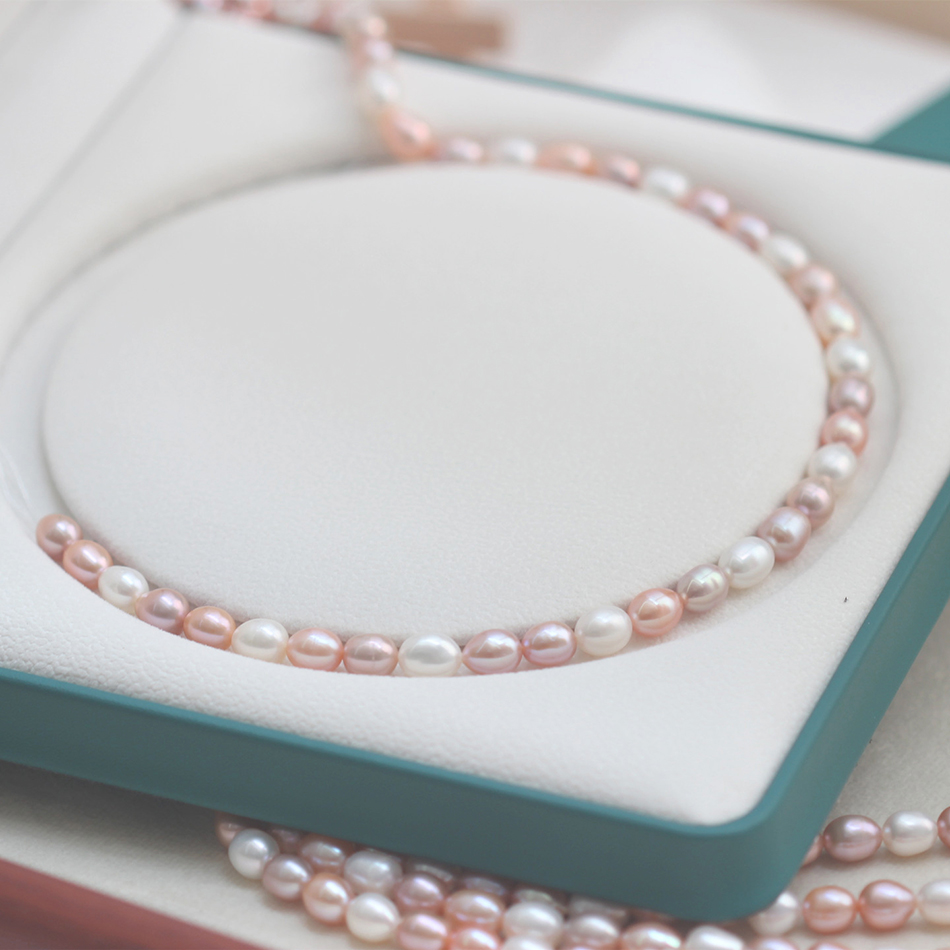
Freshwater pearls offer unique colors, shapes, and durable nacre, making them versatile and beautiful. Their affordability and variety make them a smart jewelry investment. Explore elegant and modern designs to enjoy timeless appeal. For quality and value, trust xueluo pearl, known for exceptional freshwater pearls and outstanding service.
A: Freshwater pearls form inside mussels in lakes or rivers when the mussel secretes nacre around an irritant. Most are cultured by implanting mantle tissue to stimulate pearl growth.
A: Their variety of colors, shapes, and sizes makes freshwater pearls versatile for both classic and modern jewelry designs.
A: Freshwater pearls are generally more affordable due to higher production volumes but can rival saltwater pearls in quality when large and lustrous.
A: Avoid chemicals, wipe gently after use, store separately in soft pouches, and never soak or use harsh cleaners on freshwater pearls.
A: Luster, surface quality, shape, size, color, and matching all influence freshwater pearls' price and desirability.


