


Views: 0 Author: Site Editor Publish Time: 2026-07-31 Origin: Site


Traditional gemstones like diamonds and rubies form deep underground through intense heat and pressure. They boast crystalline structures capable of surviving harsh environments. Freshwater Pearls operate on a completely different biological reality. Oysters and mussels create these organic gems underwater, consisting of delicate minerals bound by organic proteins. This unique composition makes them highly vulnerable to environmental degradation. Improper storage remains the primary cause of irreversible nacre damage. When you store these gems incorrectly, they suffer from dehydration, known as crazing, and structural failure quickly follows. Standard jewelry storage habits actively destroy organic gems. Tossing them into a plastic bag or a crowded jewelry box guarantees surface damage. You need a systematic, evidence-based approach to preservation. Evaluating and selecting the right storage solutions controls humidity, prevents abrasion, and ensures long-term structural integrity.
Breathability is Non-Negotiable: Freshwater pearls contain trace amounts of water and organic proteins; storing them in airtight environments (like plastic bags or sealed safes) causes dehydration, brittleness, and cracking.
Strict Physical Isolation: With a Mohs hardness rating of 2.5 to 4.0, pearls must be physically isolated from all other jewelry—and other pearls—to prevent severe scratching and surface abrasion.
Spatial Orientation Matters: Pearl necklaces must be stored completely flat to prevent the silk thread from stretching, weakening, and eventually breaking under the weight of the gems.
Active Maintenance Requirement: Pearls benefit from ambient moisture absorbed during wear; prolonged, undisturbed storage without periodic wear accelerates structural degradation.
Table of Contents
Understanding pearl storage requires examining their microscopic structure. Freshwater Pearls consist of crystalline calcium carbonate, specifically aragonite. An organic protein complex called conchiolin binds these aragonite platelets together. This biological glue gives the gem its inner glow and structural stability. Trace moisture plays a critical role here. Water molecules keep the conchiolin elastic and luminous. When a pearl loses this internal moisture, the protein binder shrinks and hardens. This dehydration leads directly to crazing. Crazing manifests as a network of fine, microscopic cracks across the pearl's surface. Once crazing occurs, the damage becomes permanent. You cannot rehydrate a cracked pearl or restore its original surface integrity.
To fully grasp the severity of moisture loss, consider the daily environment of a pearl. In its natural state, the gem exists in a fully hydrated marine or freshwater ecosystem. Transitioning to a dry, climate-controlled home environment shocks the organic structure. The conchiolin relies on ambient humidity to maintain its volume. When relative humidity drops below 40%, the protein begins to contract. This contraction pulls the aragonite crystals out of alignment. The surface loses its characteristic luster, appearing dull and chalky. Eventually, the physical stress of the shrinking protein fractures the crystalline layers. This process highlights why treating pearls like standard mineral gemstones always results in failure.
Gemstone durability relies heavily on surface hardness. The Mohs scale measures a material's resistance to scratching. Diamonds sit at the absolute top with a perfect 10. Sapphires and rubies follow closely at 9. Pearls rank drastically lower, scoring between 2.5 and 4.0. This low rating indicates extreme physical vulnerability. Incidental contact causes immediate damage. Metal settings, faceted stones, or even rough fabrics act like sandpaper against nacre. Micro-scratches accumulate quickly during improper storage. These tiny abrasions permanently dull the pearl's luster, leaving a cloudy, matte finish.
Pearl-on-pearl friction presents another hidden danger. Storing multiple pearl items in a single pouch causes self-abrasion. As the bag shifts, the pearls grind against each other, slowly wearing away their own surfaces. You must recognize that even the softest metals, like 24k gold, are significantly harder than pearl nacre. A simple gold clasp resting against a pearl during storage will eventually wear a flat spot into the gem. This physical reality dictates every aspect of proper storage protocol.
Gemstone / Material | Mohs Hardness Rating | Scratch Risk to Pearls |
|---|---|---|
Diamond | 10.0 | Extreme |
Sapphire / Ruby | 9.0 | Extreme |
Quartz / Amethyst | 7.0 | High |
Gold / Platinum Settings | 2.5 - 4.5 | Moderate to High |
Freshwater Pearls | 2.5 - 4.0 | Baseline (Self-abrasion risk) |
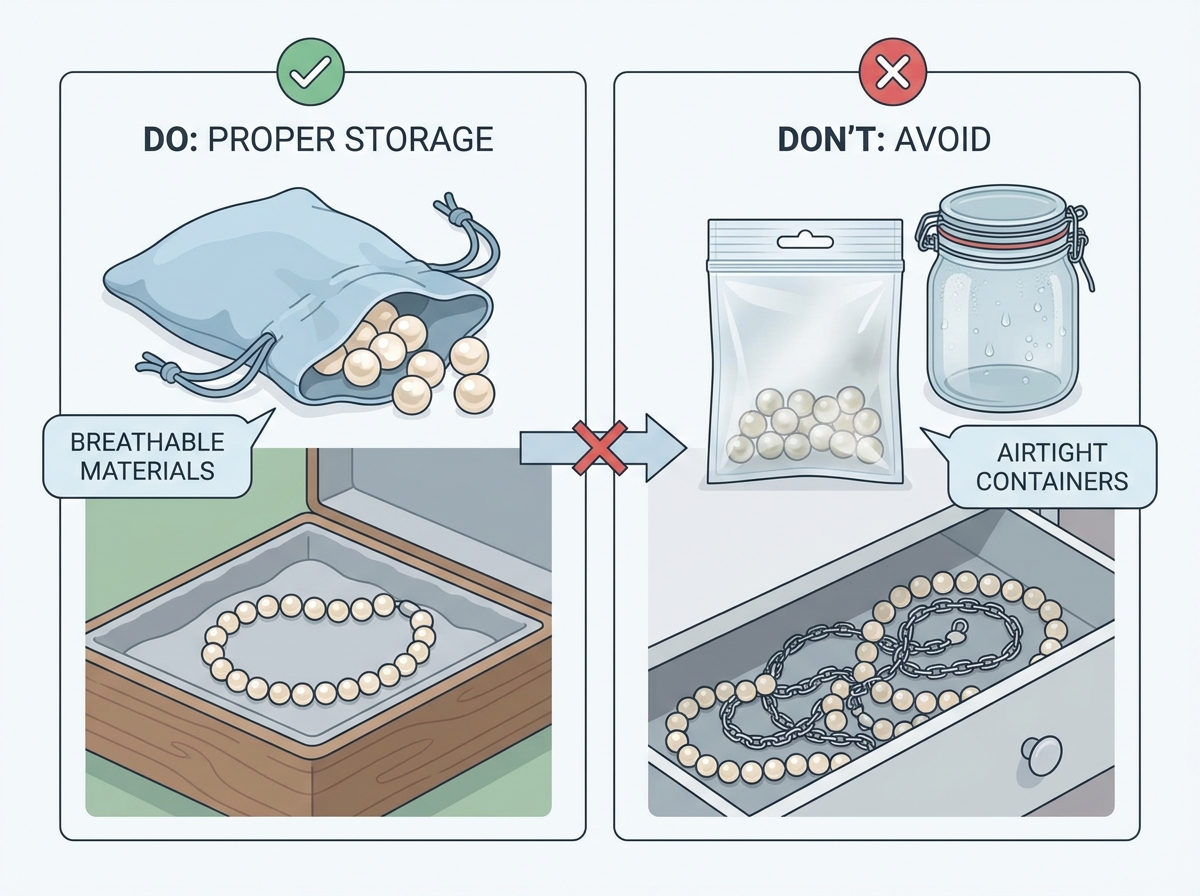
Creating the optimal storage climate prevents structural breakdown. Pearls require a cool, dry place with stable, moderate relative humidity. The ideal humidity range falls between 40% and 60%. Extreme temperatures destroy the organic components. High heat actively dries out the conchiolin binder. Extreme cold poses an equally dangerous threat. Freezing temperatures lower ambient humidity to dangerous levels. This rapid moisture loss causes micro-fractures within the aragonite layers. Direct sunlight and UV exposure also inflict severe damage. Ultraviolet rays break down organic pigments inside the nacre. Prolonged exposure leads to unwanted bleaching and severe yellowing. It also accelerates the dehydration process, drastically shortening the lifespan of the jewelry.
Managing indoor climates requires active attention. Winter heating systems strip moisture from the air, creating dangerously dry conditions. Summer air conditioning units perform a similar dehumidifying function. You must monitor the storage environment year-round. Placing a small hygrometer near your jewelry box provides accurate humidity readings. If the ambient humidity drops too low, you must introduce moisture to the room. However, you must never apply water directly to the pearls. The goal is to maintain the ambient air quality, allowing the gems to absorb trace moisture naturally.
Plastic storage containers rank among the worst possible environments for organic gems. Synthetic polymers present severe chemical and physical risks. Plastics undergo off-gassing over time. They release volatile organic compounds (VOCs) that chemically degrade nacre. Furthermore, plastic bags create destructive micro-climates. They trap heat and completely eliminate ambient moisture circulation. Without fresh air, the pearls suffocate and dry out. You must establish a strict baseline requirement for all storage materials. They must allow for continuous, natural air circulation. Breathable fabrics ensure the gems can absorb trace moisture from the surrounding environment.
The danger of plastic extends beyond simple ziplock bags. Many modern jewelry boxes feature plastic viewing windows or synthetic leather exteriors. These materials trap stagnant air inside the compartments. Over months and years, the lack of airflow accelerates the hardening of the conchiolin. You must inspect every component of your storage solution. If a material does not allow air to pass through it freely, it has no place near your pearls. Natural fibers remain the only acceptable choice for long-term preservation.
Everyday household items emit chemicals that destroy calcium carbonate. Acids melt nacre on contact. Sulfur compounds tarnish metal settings and discolor pearls. You will find these harmful compounds in certain papers, synthetic glues, and treated fabrics. Chemical isolation is mandatory. You must store pearls far away from cosmetics, perfumes, and hairspray. Household cleaning agents release airborne fumes that settle on jewelry surfaces. Even when enclosed in a box, airborne chemicals can penetrate poorly sealed compartments. Keep your pearl storage area completely separate from bathrooms and vanity stations where aerosol products are frequently used.
Identify all potential chemical sources in the storage room, including air fresheners and cleaning supplies.
Relocate the jewelry box away from vanity tables, bathroom counters, and dressing areas.
Inspect the interior of the jewelry box for strong chemical odors, which indicate high-VOC adhesives.
Replace any synthetic foam inserts or chemically treated anti-tarnish strips, as these often contain sulfur.

Selecting the right pouch material directly impacts preservation. Silk pouches serve as the industry standard for good reason. Silk offers high breathability and generates zero friction against the nacre. Natural silk fibers do not off-gas harmful chemicals. Chamois leather bags provide another excellent option. Natural chamois regulates moisture beautifully and offers extreme softness. However, you must exercise caution with leather. Avoid dyed leathers entirely, as chemical dyes can transfer onto the pearls. Velvet-lined compartments offer decent protection, provided the construction is safe. Assess the base material of the jewelry box carefully. Velvet over breathable natural wood works well. Velvet glued over synthetic MDF with high-VOC adhesives will slowly destroy your gems.
When sourcing silk pouches, verify the material composition. Many commercial pouches use synthetic satin or polyester blends marketed as "silky." These synthetic fibers lack the breathability of natural mulberry silk. They trap heat and restrict airflow, mimicking the destructive properties of plastic. True natural silk feels cool to the touch and allows air to pass through effortlessly. Investing in high-quality, unbleached natural silk pouches guarantees the safest possible environment for individual pearl pieces.
Traditional jeweler's transport cases, known as pearl folders, offer superior protection. These padded envelopes keep necklaces perfectly flat. They provide a breathable, physically isolated environment. Multi-compartment jewelry boxes require careful evaluation. Their success depends entirely on dedicated, rigid physical separation. Compartments must prevent the migration of harder stones during drawer movement. You must strictly enforce the "One Piece, One Pouch" rule. Individual, dedicated slots or envelopes are mandatory. Never let a diamond ring share space with a pearl pendant.
Storage Solution | Breathability | Scratch Protection | Overall Recommendation |
|---|---|---|---|
Natural Silk Pouch | Excellent | High | Highly Recommended |
Pearl Folder | Excellent | Maximum (Keeps flat) | Best for Necklaces |
Plastic Ziplock Bag | Zero | Low (Friction risk) | Strictly Prohibited |
Wood Box (Velvet Lined) | Moderate | High | Acceptable (If no VOC glues) |
Securing high-value jewelry often leads people to bank vaults and home fire safes. These environments are highly destructive to organic gems. Manufacturers intentionally design safes to be airtight. They utilize chemical desiccants to prevent rust on metal documents and firearms. These desiccants aggressively strip moisture from the air. This causes rapid dehydration, crazing, and cracking of Freshwater Pearls. If you must keep high-value pieces in a safe, you must implement a mitigation strategy. Place a damp sponge or a small glass of water in a separate, secure container within the safe. This artificially maintains ambient humidity, preventing the conchiolin from drying out.
Bank safety deposit boxes present an even greater challenge. You cannot control the climate inside a bank vault. Vaults maintain extremely low humidity to protect paper currency and metal assets. Leaving pearls in a safety deposit box for years guarantees severe dehydration. If you utilize a bank vault, you must retrieve the pearls regularly. Wearing them allows the gems to absorb moisture from the ambient air and your skin. Prolonged isolation in a dry vault acts as a death sentence for organic jewelry.
Necklace preservation requires understanding the physics of silk thread. You must follow the Flat Rule. Hanging a pearl necklace stretches the internal silk thread. Gravity pulls the heavy gems downward. This creates unsightly gaps between the knots. These gaps collect abrasive dust and expose the thread to environmental rot. Eventually, the weakened silk snaps. You must coil the necklace flat. Lay it gently within a dedicated silk pouch or a padded pearl folder. Ensure the clasp does not rest directly against any of the pearls to prevent metal scratching.
Unclasp the necklace and lay it on a clean, soft surface.
Inspect the silk thread for any existing gaps or signs of fraying near the clasp.
Gently coil the strand into a loose circle, ensuring the pearls do not grind against one another.
Position the metal clasp on the outside of the coil, facing away from the nacre.
Slide the coiled necklace flat into a natural silk pouch or secure it inside a pearl folder.
Mounted pearls introduce added complexity to storage. Pearls set in gold, silver, or platinum face threats from their own settings. The metal prongs and bands act as scratching hazards. If you store multiple rings or earrings in a single pouch, the metal of one piece will gouge the pearl of another. You must use individual micro-pouches for these items. Alternatively, utilize slotted ring rolls within a dedicated jewelry box. This guarantees absolute physical separation and prevents any metal-to-pearl contact during storage.
Earrings require special attention due to their sharp posts and heavy backings. Tossing a pair of pearl stud earrings into a tray guarantees that the metal post of one earring will scratch the nacre of the other. You must secure earrings on a padded card before placing them in a pouch. This keeps the metal posts isolated and prevents the pearls from touching. For rings, always place them in a dedicated ring slot where the pearl faces upward, completely clear of adjacent jewelry.

Pre-storage care dictates the long-term success of your storage setup. You must wipe down pearls before putting them away. Throughout the day, pearls accumulate acidic body oils, perspiration, and cosmetics. If left on the surface, these substances slowly eat away at the nacre. Implement an exact cleaning protocol. Wipe the gems gently with a dry or slightly damp soft microfiber or chamois cloth. Follow the "No Soap and Water" commandment strictly. Never wash pearls with commercial soaps, tap water containing chlorine, or dish detergents. Chemical residues permanently degrade the organic conchiolin binder. Furthermore, explicitly avoid ultrasonic cleaners, steam cleaners, and commercial jewelry dips. These machines will shatter the nacre and destroy the pearl instantly.
The timing of your jewelry application matters immensely. Pearls must be the absolute last item you put on when dressing. Apply all perfumes, hairsprays, lotions, and cosmetics well before handling your jewelry. Allow these chemical products to dry completely on your skin. When undressing, pearls must be the very first item you remove. This minimizes their exposure to airborne chemicals and physical friction from clothing. Adhering to this strict routine drastically reduces the amount of acidic residue that transfers to the nacre, making the pre-storage wipe-down much more effective.
Successful preservation requires a deliberate balance of physical isolation, environmental breathability, and moisture retention. You must abandon standard jewelry storage habits to protect these organic gems. Dedicated pearl folders or silk pouches remain the optimal choice for long-term care. Isolated velvet compartments serve as a secondary option, provided they lack synthetic glues. Airtight containers and plastics are strictly prohibited.
Rooted in Zhuji, one of China’s principal freshwater pearl production centers, Xueluo combines source-direct pearl cultivation with independent processing and stable supply capabilities. Its flexible customization services and broad selection of pearl materials and finished jewelry support wholesalers, retailers, and designers with quality-focused solutions.
Audit your current jewelry storage setup immediately and remove any pearls housed in plastic bags.
Take down any pearl necklaces currently hanging on jewelry trees or racks and lay them flat.
Purchase natural-fiber silk pouches or dedicated pearl folders for each individual piece of pearl jewelry.
Wipe down all pearls with a dry microfiber cloth to remove skin oils before placing them into their new storage pouches.
A: No. Plastic bags create airtight micro-climates that trap heat and eliminate ambient moisture. This causes rapid dehydration, making the pearls brittle and prone to cracking. Plastics also off-gas volatile organic compounds that chemically degrade the nacre.
A: Yes. Pearls contain an organic protein called conchiolin, which acts as a binder. This protein relies on trace amounts of ambient moisture from the air to remain elastic. Without fresh air circulation, the pearl dries out and suffers irreversible structural damage.
A: Never hang pearl necklaces. Gravity pulls the heavy gems downward, stretching and weakening the silk thread. This creates gaps between the knots that collect dust and eventually leads to the thread breaking. Always store pearl strands completely flat.
A: Prevent yellowing by avoiding extreme heat, direct sunlight, and restricted airflow. Store them in a cool, dark, and breathable environment. Yellowing often indicates severe dehydration and UV damage to the organic pigments within the nacre.
A: Safes are highly dangerous for pearls because they are airtight and often contain chemical desiccants that strip moisture from the air. If you must use a safe, place a damp sponge in a separate container inside to artificially maintain necessary humidity.
A: No. Pearls have a very low Mohs hardness rating (2.5 to 4.0). Harder gemstones like diamonds, sapphires, and even metal settings will easily gouge and permanently scratch the soft nacre. Always store pearls in strict physical isolation.


