


Views: 0 Author: Site Editor Publish Time: 2026-07-31 Origin: Site


Freshwater Pearls are organic gemstones composed of crystalline calcium carbonate, known as aragonite, bound together by a protein called conchiolin. This biological structure makes them uniquely vulnerable to their environment. Improper care easily causes irreversible chemical and physical damage to the nacre. Before cleaning any jewelry piece, you must verify you are handling real cultured pearls rather than imitation glass, plastic, or shell variants. Imitation coatings require entirely different care methods, while real nacre remains highly sensitive to friction and chemicals.
Conflicting and dangerous cleaning advice clutters the internet. Recommendations to use vinegar, toothbrushes, or chemical jewelry dips routinely lead to nacre degradation. These harsh methods strip away luster and ruin family heirlooms. You need an evidence-based, jeweler-approved framework for safely cleaning and maintaining your jewelry. Proper care focuses heavily on risk mitigation, selecting the right tools, and preserving the structural integrity of the gemstone.
Table of Contents
Mechanical Cleaners are Destructive: Ultrasonic, ionic, and steam cleaners will cause immediate, irreversible micro-fractures, delamination, and structural damage to freshwater pearls.
Chemical Sensitivity: Only pH-neutral, additive-free soaps (like mild baby shampoo) diluted in lukewarm water are safe for occasional wet cleaning; acids, alcohols, and ammonia will dissolve the nacre.
Thread Integrity Matters: Wetting the silk thread during cleaning accelerates rotting, stretching, and bacterial growth; cleaning methods must isolate the pearl surface from the stringing material.
Prevention Over Restoration: Implementing the "Last On, First Off" rule and performing consistent post-wear wiping with a dry microfiber cloth eliminates 90% of the need for high-risk wet cleaning.
Nacre consists of microscopic aragonite platelets arranged in overlapping layers. This crystalline structure gives the gemstone its signature luster. However, nacre is highly porous. Its organic nature absorbs liquids, skin oils, cosmetics, and environmental chemicals. Surface-level cleaning requires a delicate balance. You must remove surface contaminants without pushing liquids deeper into the porous structure. When sebum and sweat accumulate on the surface, they slowly break down the conchiolin binding the aragonite crystals. This degradation leads to a dull, chalky appearance that no amount of polishing can fix.
Understanding the absorption rate of nacre helps dictate your maintenance schedule. If you wear your jewelry against bare skin during a hot day, the pearls absorb perspiration. Perspiration contains mild acids. Leaving these acids on the surface overnight initiates microscopic etching. Wiping the surface immediately after wear neutralizes this threat. You are essentially managing a biological material, much like caring for fine leather or untreated wood.
Calcium carbonate reacts violently with common household agents. Acids like vinegar and lemon juice dissolve the nacre upon contact. Alkalines like ammonia strip the surface layers, leaving a dull, chalky finish. Abrasives such as baking soda or toothpaste create microscopic scratches. These scratches permanently destroy the light-reflecting properties of the gemstone. Once chemical etching occurs, the damage cannot be reversed.
Many people mistakenly use silver polish or brass cleaners on mixed-metal jewelry containing pearls. These industrial solvents contain heavy abrasives and harsh chemicals. Even a brief accidental exposure to silver polish will permanently cloud the nacre. You must isolate the gemstone completely when maintaining the surrounding metal settings.

Verify your jewelry before applying any cleaning protocol. The tooth test offers a reliable diagnostic. Gently rub the pearl against the biting edge of your front tooth. Real nacre feels slightly gritty, like fine sandpaper. Imitation glass or plastic feels perfectly smooth. Additionally, inspect the drill holes under a loupe. Real pearls show clean drill edges, while imitations often display peeling paint or ragged plastic coatings.
Weight also provides a clue. Real cultured pearls carry a specific density that feels heavier than hollow plastic imitations, though solid glass fakes can mimic this weight. Temperature serves as another indicator. Real nacre feels cool to the touch initially and slowly warms to your body temperature. Plastic imitations feel warm immediately. Knowing exactly what material you are handling dictates your entire maintenance approach.
Successful maintenance preserves the original orient and luster. It prevents yellowing and discoloration over time. Proper care also maintains the tensile strength of the silk thread. If the gemstone remains radiant and the knots stay tight, your cleaning protocol is working. You should inspect the drill holes regularly. If you see dark buildup around the drill hole, your cleaning method is failing to remove accumulated dirt and body oils.
Major gemological institutions recommend the warm soapy water method for deep cleaning. This standard requires strict adherence to specific materials. The soap must be pH-neutral. It cannot contain degreasers, synthetic fragrances, or dyes. Mild baby shampoo fits these criteria perfectly. The water must be lukewarm. Distilled water prevents mineral deposits from settling on the nacre.
You must control the dilution ratio precisely. Using too much soap leaves a sticky residue on the nacre, which attracts more dirt and dust. A single drop of baby shampoo in a cup of distilled water provides enough surfactant to break down surface oils without leaving a film. The goal is to lift the dirt, not to scrub the surface.
Avoid commercial liquid jewelry cleaners. Over 95% of these solutions contain harsh chemicals designed for hard metals and diamonds. "All-purpose" or "connoisseur" dips will strip the conchiolin from organic gemstones. Only use specialized, certified pearl-safe formulations if you must buy a commercial product. Otherwise, stick to the baby shampoo method.
Even products labeled "safe for delicate stones" often contain mild ammonia or alcohol derivatives. These ingredients accelerate the dehydration of the nacre. Dehydrated pearls develop microscopic surface cracks, a condition known as crazing. Once crazing begins, the structural integrity of the gemstone is compromised permanently.
Never place organic gemstones in ultrasonic or steam cleaners. Ultrasonic machines use high-frequency sound waves to create cavitation bubbles. When these bubbles collapse, they produce intense local heat and pressure. This process shatters the delicate nacre layers. Steam cleaners cause severe thermal shock, leading to immediate cracking and delamination.
Jewelers use ultrasonic tanks to blast polishing compound out of intricate diamond settings. The sheer force of the cavitation will literally vibrate the nacre off the pearl nucleus. If you take a pearl ring to a jeweler for sizing or polishing, insist they remove the pearl from the setting before using any mechanical cleaning equipment.
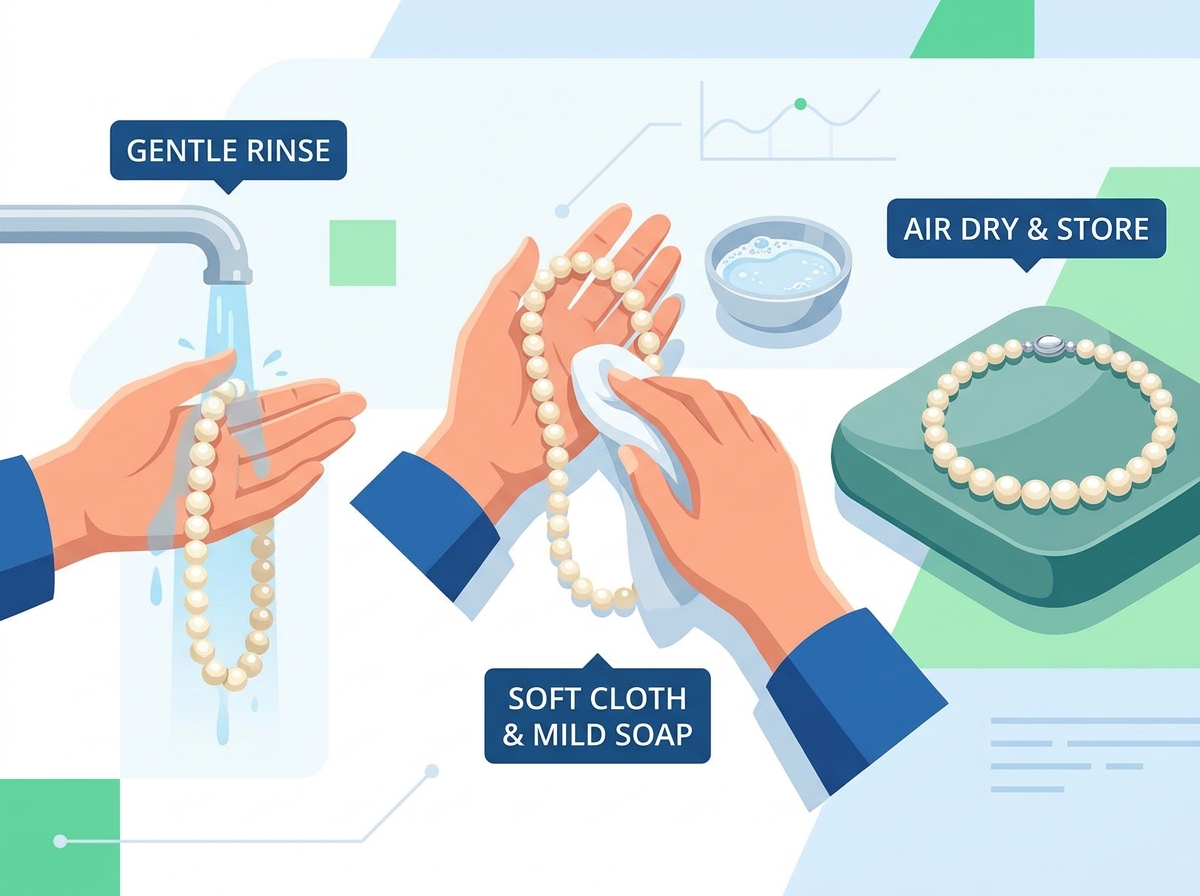
Consistent dry cleaning prevents grime buildup. Follow these steps after every wear:
Select a clean, lint-free microfiber or chamois cloth.
Gently wipe each gemstone individually, rolling it between your fingers.
Focus on the areas near the drill holes where oils accumulate.
Remove body oils, cosmetics, hairspray, and perspiration completely.
Store the jewelry flat in a soft, breathable pouch.
Reserve deep cleaning for visible stains. Do not submerge the jewelry.
Mix one cup of lukewarm distilled water with one drop of mild baby shampoo.
Dampen a soft microfiber cloth in the solution. Wring it out until barely damp.
Wipe each gemstone individually. Avoid pulling on the silk thread.
Clean metal clasps carefully. Do not let metal polishes touch the nacre.
Rinse by wiping the jewelry with a separate cloth dampened only with plain distilled water.
Proper drying protects the silk thread. Lay the jewelry flat on a clean, dry, lint-free white towel. Never hang wet strands. Hanging stretches the wet silk and weakens the knots. Allow the jewelry to air dry completely for at least 24 hours before wearing or storing. Trapped moisture causes thread rot and bacterial growth.
If you wear a damp strand, the wet silk will stretch under the weight of the pearls. This stretching creates gaps between the knots and the pearls, allowing the pearls to rub against each other. Friction between pearls wears down the nacre near the drill holes. Always ensure absolute dryness before returning the piece to your jewelry box.
Microfiber cloths offer excellent absorbency and trap oils without scratching. 100% cotton flannel provides a soft touch but may leave lint behind. Genuine chamois leather excels at buffing nacre to a high shine. Avoid paper towels or rough fabrics entirely. Paper towels contain wood fibers that act like fine-grit sandpaper on organic surfaces.
Standard toothbrushes scratch nacre. Even brushes labeled "extra soft" contain nylon bristles that damage organic surfaces. Never use a toothbrush on the gemstone itself. You may use an ultra-soft, natural-hair cosmetic brush solely to clean intricate metal settings around the gemstone, ensuring the bristles do not scrub the nacre.
Mild baby shampoo remains the safest choice. Modern dish soaps contain heavy degreasers, moisturizers, and antibacterial agents. These additives leave a dulling film on the nacre or break down the organic structure. Stick to products with minimal, pH-neutral ingredients.

Tap water contains chlorine, calcium, and magnesium. These minerals leave hard water spots on the nacre and can cause long-term chemical damage. Distilled water provides optimal safety. It lacks the mineral content that threatens the crystalline structure.
Cleaning Material | Recommended Use | Risk Level |
|---|---|---|
Microfiber Cloth | Daily wiping and drying | Low |
Baby Shampoo | Occasional deep cleaning | Low |
Distilled Water | Rinsing and diluting soap | Low |
Dish Soap | Do not use | High |
Toothbrush | Do not use | High |
Apply perfumes, hairsprays, cosmetics, and lotions before putting on your jewelry. Wait for these products to dry completely. Make your jewelry the last item you put on and the first item you take off. This protocol prevents chemical buildup and minimizes the need for high-risk wet cleaning.
Airtight plastic bags cause organic gemstones to dehydrate, craze, and crack. They require trace amounts of moisture from the air. Store them in soft silk, velvet, or chamois pouches. Keep them in temperature-controlled environments with moderate humidity. Keep them separated from hard metals and diamonds to prevent scratching.
Assess your silk thread regularly. Look for fraying, stretched knots, or discoloration. If the gemstones slide freely between the knots, the thread has stretched too far. Wear dictates restringing frequency. Heavily worn strands require professional restringing annually. Occasional wear extends this timeline to every two or three years.
DIY cleaning has limits. Utilize a professional jeweler for deep restoration. Jewelers can safely remove the gemstones, clean the metal settings ultrasonically, and inspect the structural integrity of the knots. Professional restringing ensures the longevity and safety of your investment.
The safest way to clean Freshwater Pearls is through consistent, dry wiping after every wear. Reserve the damp-cloth method with pH-neutral soap only for visible staining or residue buildup. Avoid harsh chemicals and mechanical cleaners entirely.
Founded in 2007 in Zhuji, widely known as China’s pearl capital, Xueluo integrates freshwater pearl cultivation, processing, jewelry design, and global supply. Supported by source-direct production, AI-assisted sorting, strict quality control, and flexible customization, the company supplies consistent pearl materials and finished jewelry to wholesalers, retailers, and designers worldwide.
To maintain your collection safely, assemble a dedicated care kit containing distilled water, mild baby shampoo, high-quality microfiber cloths, and a flat drying towel.
Take these next steps to protect your jewelry:
Audit your current jewelry cleaning supplies and discard any dangerous chemical dips or stiff brushes.
Establish a strict post-wear wiping routine using a clean microfiber cloth.
Inspect the silk thread on your strands today and book a professional restringing service if you notice stretching or fraying.
A: No. Vinegar is highly acidic. It will immediately react with the calcium carbonate structure, dissolving the nacre and permanently destroying the luster.
A: Wipe them with a dry microfiber cloth after every single wear. Perform a deep cleaning with a damp cloth and mild soap only one to two times a year, or when visibly soiled.
A: Never wear them in water. Chlorine, hard water minerals, and soap scum damage the nacre. Submersion also ruins the silk thread, causing it to stretch and rot.
A: If the silk thread gets wet, it weakens and stretches. You must lay the strand flat on a clean towel and allow it to dry completely for at least 24 hours before wearing.
A: Gentle buffing with a clean chamois leather can help restore surface shine. However, if the nacre is heavily damaged or chemically etched, the loss of luster is irreversible.
A: No. Baking soda is highly abrasive. It will create microscopic scratches across the delicate nacre surface, permanently dulling the gemstone.
A: Spot-clean the metal using a specialized jewelry polishing cloth. Work carefully to ensure the polishing compound never touches the pearl's surface.


