


Historically, fewer than one in 10,000 wild oysters ever produced a genuine gemstone. High-net-worth buyers, collectors, and investors face significant challenges in justifying the exponential price premiums of natural gems without a technical understanding of their formation, leading to vulnerability to high-quality imitations or undisclosed cultured variants. We must establish that understanding the exact biological process of how a pearl is made is not just academic—it is the foundational framework required to evaluate nacre quality, verify authenticity, and make a secure, data-backed investment decision. You need to look past marketing myths and examine the microscopic biological anomaly that creates it. Today, mass-produced alternatives flood the global market. Without a technical grasp of formation, buyers remain vulnerable. We will break down the mechanics of epithelial sac formation, structural differences, and rigorous laboratory authentication steps required before acquisition.
Biological Rarity Dictates Value: A natural pearl forms entirely without human intervention, relying on a microscopic biological anomaly that results in concentric layers of solid nacre, directly driving its investment premium.
Structural Differences are Measurable: Unlike cultured pearls which contain a large artificial bead nucleus, natural pearls are nearly 100% nacre, a structural difference verifiable via X-ray radiography.
Luster and Orient as Quality Indicators: The specific environmental conditions during the pearl's years-long formation process dictate the microscopic alignment of aragonite platelets, creating the unique optical phenomena (luster and orient) used to grade the gem.
Authentication is Non-Negotiable: Due to sophisticated market alternatives, purchasing decisions must rely on independent gemological laboratory reports (e.g., GIA, SSEF) rather than visual inspection alone.
Table of Contents
A persistent myth suggests that a simple grain of sand initiates gemstone formation. This is biologically inaccurate. Mollusks live on sandy ocean floors and riverbeds. They easily expel sand and grit from their shells daily. The actual catalyst involves a parasitic intrusion or severe damage to the mollusk's delicate mantle tissue. When a parasite, such as a trematode worm, or a predator like a boring sponge breaches the shell, it displaces microscopic epithelial cells from the outer mantle into the deeper connective tissue of the organism.
These displaced cells trigger a unique biological defense mechanism. Understanding this random, microscopic genesis explains the extreme rarity of wild gems. It also explains their frequent asymmetry. Because the catalyst is irregular and organic, perfectly spherical formations are statistical anomalies. Buyers seeking perfect spheres must set realistic expectations. Baroque shapes are the standard for wild formations. Recognizing this biological reality helps you evaluate the authenticity of an unassisted natural pearl during the initial inspection. The organic, unpredictable nature of the catalyst directly dictates the final shape of the asset.
Once epithelial cells enter the connective tissue, they multiply rapidly. They form a continuous biological barrier known as a pearl sac around the intruding threat. This sac isolates the irritant from the rest of the organism. The cells then begin secreting a combination of materials to neutralize the threat, building the gemstone layer by layer.
The displaced epithelial cells multiply to encapsulate the foreign body or damaged tissue.
The newly formed sac secretes conchiolin, a complex organic protein that acts as a binding glue.
The sac then secretes microscopic crystals of aragonite, a crystalline form of calcium carbonate.
The mollusk deposits these materials in alternating, concentric layers over several years.
Together, conchiolin and aragonite form nacre, commonly known as mother-of-pearl. Think of it as a microscopic brick-and-mortar structure. The aragonite platelets are the bricks, and the conchiolin is the mortar. This continuous, unassisted secretion creates a highly durable, solid nacre structure. This solid composition is a primary factor in the longevity of the gem. It guarantees the heirloom viability that collectors demand when allocating capital to rare assets. The structural integrity of solid nacre prevents the gem from cracking or peeling under normal wear.
The biological genesis varies significantly between marine oysters and freshwater mussels. Saltwater gems typically form in marine bivalves belonging to the Pteriidae family. These environments present harsh conditions, fluctuating temperatures, and specific oceanic water chemistry. The Persian Gulf historically hosted massive populations of Pinctada radiata, the oyster responsible for some of the world's most famous historical gems. Freshwater gems form in mussels from the Margaritiferidae or Unionidae families. Rivers and lakes offer entirely different nutrient profiles and trace minerals.
Water chemistry directly alters nacre density. Saltwater environments generally force a slower metabolic rate in the host mollusk. This slower growth yields tighter aragonite structures. Consequently, saltwater wild gems historically command higher auction premiums. They exhibit superior luster and denser structural integrity. Freshwater mussels can often produce multiple gems simultaneously, whereas marine oysters typically produce only one. Investors must verify the environmental origin through laboratory testing to justify specific valuation tiers.

Nacre secretion is not a uniform process. It depends heavily on environmental variables. Water temperature dictates the mollusk's metabolic speed. Colder waters slow down nacre production. Nutrient availability determines the volume of calcium carbonate the organism can process. The specific species of the host mollusk also plays a vital role in the final structural quality. A mollusk living in a nutrient-rich, stable temperature environment will secrete nacre differently than one surviving in turbulent, cold waters.
Slower growth in specific wild environments yields tighter, more uniform aragonite structures. This tight microscopic alignment directly correlates to premium luster. Collectors evaluate this luster rigorously during acquisition. Rapid growth often results in porous, chalky nacre with poor light return. Understanding these environmental variables allows you to assess why two gems of identical size carry vastly different market valuations. The environment leaves a permanent structural fingerprint on the gem.
You must contrast the wild process with modern cultured techniques to understand market valuations. Cultured production relies on direct human intervention. A skilled technician surgically opens the host mollusk. They implant a perfectly spherical shell bead nucleus into the reproductive organ (the gonad). Alongside this bead, they insert a small piece of donor mantle tissue from another mollusk. This donor tissue is essential because it contains the epithelial cells required to secrete nacre.
This surgical seeding forces the creation of the pearl sac around the artificial bead. The mollusk then coats the bead with nacre. This establishes the baseline for why cultured variants are scalable commodities. Technicians can control the shape, size, and volume of production. By using a perfectly round bead, they guarantee a perfectly round final product. In contrast, wild variants remain finite, non-scalable assets. They form entirely by chance, making them significantly rarer and exponentially more valuable.
The internal cross-section reveals the most critical structural difference between the two categories. A wild gem consists of concentric nacre from its microscopic center all the way to the surface. It is virtually 100% solid nacre. A cultured gem consists primarily of the large artificial bead. The mollusk only deposits a thin nacre coating over this nucleus. Depending on the farming practices and harvest time, this coating often measures just 0.8mm to 2.0mm thick.
Nacre thickness serves as a primary evaluation metric. Thin nacre on cultured variants can wear away over time. Friction against skin, clothing, or other jewelry can expose the dull, opaque shell bead underneath. Once the bead is exposed, the gem loses all optical value. The solid structure of a wild gem guarantees lifelong durability. It will never wear down to an artificial core. This structural integrity justifies the steep investment premium.
Evaluation Metric | Wild Formation | Cultured Formation |
|---|---|---|
Catalyst | Random microscopic parasite or tissue damage. | Surgical implantation of a shell bead and donor tissue. |
Internal Structure | Nearly 100% solid concentric nacre. | Large artificial bead with a thin nacre coating. |
Shape Probability | Rarely spherical; mostly baroque, drop, or button. | Highly spherical due to the artificial bead template. |
Durability | Lifelong structural integrity; cannot wear down to a core. | Nacre can wear away over time, exposing the bead. |
X-Ray Signature | Concentric growth rings radiating from the center. | Solid radio-opaque center with a thin outer ring. |
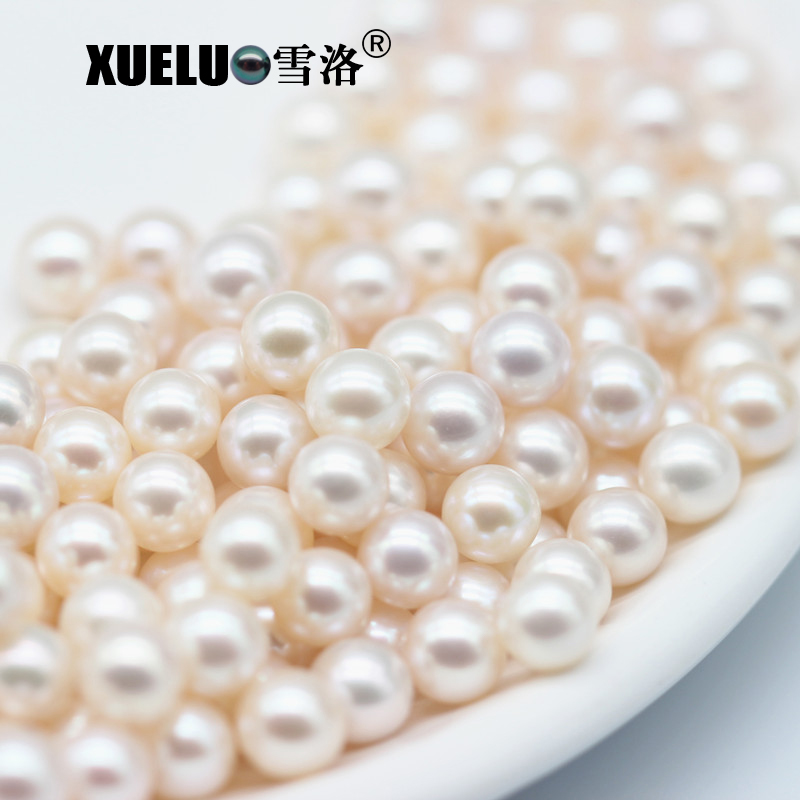
Luster and orient are the primary optical metrics used for grading. Luster refers to the surface reflection of light. Orient refers to the deep iridescence caused by light refracting through multiple microscopic layers of aragonite. The biological layering process dictates the intensity of these optical effects. Tighter, more uniform aragonite platelets create sharper light refraction. The thickness of these platelets often matches the wavelength of visible light, creating a prism effect.
You need a reliable framework to evaluate light return. High-quality wild gems exhibit a deep, glowing luster. The light appears to emanate from within the gem itself. This contrasts sharply with the superficial, glassy shine often seen in synthetics or heavily treated cultured variants. When inspecting a gem, look for sharp reflections of surrounding light sources on the surface. Blurry reflections indicate porous or low-quality nacre. A high-quality gem will reflect your face almost like a mirror.
The lack of a spherical bead nucleus heavily influences surface topography. Wild gems rarely form as perfect spheres. They grow organically around irregular microscopic irritants. This irregular growth results in unique shapes. You will frequently encounter baroque, button, and drop shapes in high-end collections. Perfectly round wild gems command astronomical prices due to their sheer statistical improbability.
You must reframe these shape anomalies. They are not defects. They are authenticating hallmarks of the natural formation process. Each distinct shape carries its own market valuation. Drop shapes are highly prized for pendants and earrings because they draw the eye downward. Button shapes work exceptionally well for rings and cufflinks because they sit flush against the metal setting. Embrace the asymmetry as proof of unassisted biological genesis.
The natural color of the gem depends entirely on the host mollusk and the local water chemistry. Specific trace elements in the water influence the pigmentation. Furthermore, the genetics of the mollusk's outer mantle tissue, often called the "lip," dictate the primary hue. For example, the Pinctada margaritifera oyster has a black lip, which produces dark, metallic tones. This biological combination produces natural colors ranging from cream and rose to silver and deep black.
You must remain vigilant regarding artificially dyed gems. Natural color distribution is rarely perfectly uniform. You will often see subtle variations in tone across the surface. This uneven distribution serves as an initial visual check during evaluation. If a gem exhibits an aggressively uniform, saturated color, it likely underwent artificial dye treatments. Silver nitrate is commonly used to darken gems, while organic dyes create pinks and purples. Always demand untreated specimens for investment purposes.
High-end cultured gems can visually mimic wild ones to the naked eye. Advanced farming techniques produce exceptionally round, highly lustrous cultured variants. This visual equivalency creates a dilemma for buyers. You must weigh the astronomical price premiums of wild gems against the accessible aesthetics of cultured alternatives. A strand of cultured gems might cost a few thousand dollars, while a visually similar wild strand could exceed a million dollars at auction.
Force yourself to define your success criteria before purchasing. Are you buying purely for aesthetic design and daily wear? If so, high-quality cultured variants offer superior value and uniformity. Are you purchasing for historical provenance, absolute rarity, and long-term asset preservation? If so, you must allocate capital to wild gems. The premium pays for the biological rarity, not just the visual appeal. You are buying a geological and biological anomaly.
Current market dynamics heavily favor wild gems for long-term holding. Severe oceanic pollution and historical overfishing have virtually halted new wild harvesting. The Persian Gulf, once the primary source of wild gems, produces a fraction of its historical output due to the expansion of the oil industry. Due to this modern scarcity, the vast majority of wild gems entering the market are salvaged from historical estate jewelry.
Many exceptional pieces are recovered from antique textiles. Historically, royal garments were heavily embroidered with gold leaf, sequins, and natural seed pearls. Salvaging these gems introduces antique provenance into the valuation. You are acquiring a finite historical artifact. However, you must verify the historical documentation of salvaged gems. This provenance justifies the steep entry price but requires careful consideration of market liquidity. Selling rare historical assets takes time and specialized auction networks.
Visual inspection is insufficient for verifying wild genesis. You must rely on advanced technological authentication. X-ray radiography is the industry standard. Technicians pass X-rays through the gem to reveal its internal structure. Aragonite is radio-opaque, meaning it blocks X-rays, while conchiolin is radio-lucent, allowing X-rays to pass through. A wild gem will show concentric growth rings radiating from a microscopic center, alternating between aragonite and conchiolin.
Micro-CT scanning provides even greater detail. It takes thousands of two-dimensional X-ray images and reconstructs them into a three-dimensional model of the internal structure. This allows gemologists to detect tiny internal cavities or evidence of early bead rejection. A cultured gem will reveal a large, solid white bead nucleus with a thin outer ring of nacre. This is the only definitive way to prove how the gem was made. You must demand this level of technical proof before finalizing any high-value transaction.
You must secure independent laboratory certifications to mitigate financial risk. Do not accept in-house appraisals from the selling dealer. Rely only on reports from authoritative bodies. The Gemological Institute of America (GIA), the Swiss Gemmological Institute (SSEF), and the Gübelin Gem Lab are the most respected institutions globally. Their reports carry weight in the auction market and provide the necessary documentation for insurance purposes.
Outline exactly what to look for on a gemological report. The document must explicitly state "Natural" rather than "Cultured." It should detail the environmental origin, specifying saltwater or freshwater. The report must include strict treatment disclosures. It must confirm the absence of artificial dyes, bleaching, or irradiation. A clean report from a top-tier lab ensures asset liquidity.
Verify the explicit "Natural" designation on the report.
Check for saltwater or freshwater origin confirmation.
Ensure the report explicitly states "No Indications of Treatment."
Confirm the report includes an X-ray structural analysis.
Cross-reference the report number on the laboratory's official database.
Before commissioning a lab report, you can perform immediate, actionable risk-mitigation steps. The market is flooded with coated glass and plastic imitations. Use the "tooth test" for early-stage physical evaluation. Gently rub the gem against the biting edge of your front tooth. A genuine nacre surface feels slightly gritty, like fine sandpaper. Glass or plastic imitations feel perfectly smooth and slick.
Examine the drill hole edges under a jeweler's loupe. Genuine nacre drills cleanly, leaving sharp, defined edges. Imitations often show signs of peeling, flaking, or ragged edges around the drill hole. You might even see the underlying glass or plastic core. Furthermore, glass imitations feel unusually heavy, while plastic imitations feel unnaturally light. These simple physical checks help you filter out obvious fakes before spending money on professional laboratory authentication.
The true value of a wild gem is intrinsically tied to its unassisted, highly improbable biological formation process. It is a microscopic anomaly transformed into a durable, finite asset. Choose wild gems for strict investment purposes, historical significance, and absolute rarity. Choose cultured variants if your primary goal is accessible, uniform aesthetics for daily wear.
To secure your investment, follow these actionable next steps:
Request comprehensive X-ray certification from recognized laboratories before any capital changes hands.
Consult with an independent gemologist to verify historical provenance and market valuation.
Physically evaluate the luster and orient under natural daylight conditions to assess nacre quality.
Perform the tooth test and drill hole inspection to immediately rule out synthetic imitations.
A: The biological timeline typically ranges from three to seven years. The exact duration depends heavily on the specific mollusk species, water temperature, and nutrient availability. Slower growth in colder waters generally produces tighter aragonite structures and superior luster.
A: No. High-quality cultured variants can visually mimic wild ones to the naked eye. While wild gems are more frequently baroque in shape, definitive identification requires X-ray radiography to examine the internal growth rings and confirm the absence of a bead nucleus.
A: Wild gems form around irregular, microscopic irritants like parasites or displaced tissue. Without a perfectly spherical artificial bead to guide the nacre deposition, the biological growth remains organic and asymmetrical, resulting in baroque, drop, or button shapes.
A: Yes. Colder water temperatures slow down the mollusk's metabolic rate and nacre secretion. This slower biological process yields denser, more tightly packed aragonite crystals. This tight structural alignment directly enhances the gem's durability and surface luster.
A: The tooth test involves gently rubbing the gem against the biting edge of your front tooth. Genuine nacre feels slightly gritty, similar to fine sandpaper, due to the crystalline aragonite structure. Plastic or glass imitations will feel completely smooth.
A: Historically, saltwater gems command higher auction premiums. Saltwater environments typically produce denser nacre and superior luster. However, exceptionally rare, high-quality freshwater wild gems with documented antique provenance can still achieve significant market valuations among specialized collectors.


