English


Views: 0 Author: Site Editor Publish Time: 2026-05-27 Origin: Site


Are freshwater pearls worth your attention?
Freshwater pearls are loved for their natural beauty, soft luster, and wide variety of shapes and colors.
In this post, it will help buyers better understand pearl quality, many suppliers use grading systems such as A, AA, AA+, AAA, and AAAA. Higher grades usually indicate stronger luster, cleaner surfaces, rounder shapes, and better matching.
Table of Contents
We could evaluate pearls based on several key factors, including luster, shape, surface quality, color, size, and matching. Together, these characteristics determine the pearl’s beauty, rarity, and overall value.
Luster is the glow that gives a pearl its signature beauty and elegance. It refers to how light reflects off the pearl’s surface while also penetrating the nacre layers, creating a soft inner glow.
High-quality freshwater pearls display:
Bright reflections
Sharp shine
Deep radiance
Clean surface reflections
Freshwater pearls are known for their soft, glowing luster rather than the highly mirror-like shine often seen in some saltwater pearls. Pearls with strong luster appear lively and luxurious, while pearls with poor luster tend to look dull, chalky, or lifeless.
When grading freshwater pearls, luster is usually considered the single most important quality factor because it has the greatest impact on visual beauty.
A quick way to evaluate pearl luster is to examine reflections on the pearl surface. High-luster pearls produce crisp and bright reflections, while lower-quality pearls show blurry or muted reflections.
Shape plays a major role in determining freshwater pearl value. Perfectly round freshwater pearls are extremely rare, with only a small percentage achieving near-perfect symmetry. Because of this rarity, round pearls are generally the most valuable and highly sought after.
Common freshwater pearl shapes include:

The rarest and most classic pearl shape, commonly used in luxury necklaces and earrings.
Slightly off-round but still visually balanced and elegant.

Elongated pearls that create a refined appearance.
Flattened shapes often used in earrings and rings.
Pear-shaped pearls commonly used in pendants and earrings.
Irregular and unique pearls valued for their artistic and organic appearance.
Although baroque pearls are usually less expensive than round pearls, they have become increasingly popular in modern jewelry design because every pearl has a one-of-a-kind shape.

Surface quality measures how smooth and clean the pearl’s exterior appears. Since pearls are natural gemstones formed inside mollusks, small imperfections are completely normal.
Common pearl blemishes include:
Tiny pits
Surface spots
Wrinkles
Ridges
Chalky areas
Growth marks
High-quality freshwater pearls typically have smooth surfaces with only minor blemishes. Pearls with large or highly visible imperfections are considered lower grade because blemishes reduce visual appeal and may affect durability.
Minor blemishes that blend naturally into the pearl’s color are usually less noticeable, especially once the pearls are set into jewelry.
Premium freshwater pearls should appear:
Smooth
Clean
Evenly textured
Free from obvious defects when viewed at a normal distance
Freshwater pearls naturally occur in a wide range of beautiful colors, making them highly versatile for jewelry design.
Popular freshwater pearl colors include:
White
Cream
Pink
Peach
Lavender
Soft pastel shades
Color preference is largely subjective and depends on personal style, market trends, and regional demand. Because of this, color affects desirability more than technical quality grading.
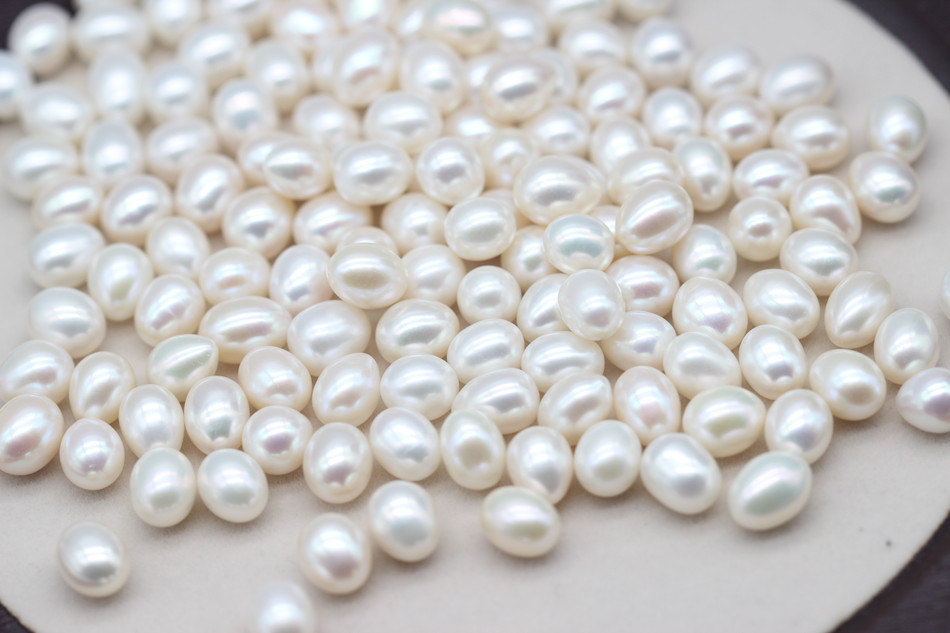
Overtones are subtle translucent colors that appear over the pearl’s main body color. These overtones add depth, richness, and complexity to the pearl’s appearance.
Common pearl overtones include:
Rose
Silver
Cream
Pink
Rainbow-like iridescence
For example, a white pearl with soft rose overtones is often considered more attractive and valuable than a plain white pearl without overtone.
Pearls with naturally rich colors and attractive overtones are generally more sought after in the jewelry market.
Freshwater pearl size is measured in millimeters (mm). Larger pearls are typically rarer and more valuable, especially when combined with excellent luster and clean surfaces.
For freshwater pearl jewelry, common pearl sizes include:
5–6 mm for delicate jewelry
7–8 mm for classic necklaces
8–9.5 mm for premium pearl jewelry
10 mm+ for luxury statement pieces
Matching refers to how consistent pearls appear when combined into a jewelry piece such as:
Pearl necklaces
Bracelets
Earrings
Professional pearl matching evaluates:
Size consistency
Shape uniformity
Color harmony
Similar luster
Surface consistency
Well-matched pearls create a balanced and elegant appearance, significantly increasing the jewelry’s overall value and visual appeal.
Poorly matched pearls may appear uneven or less refined unless the jewelry intentionally uses mixed shapes and colors for an artistic design.
Freshwater pearl quality is determined by the balance of several grading factors, including luster, shape, surface quality, color, size, and matching.
Among these, luster is generally considered the most important because it directly affects how beautiful and vibrant the pearl appears. By understanding these grading standards, buyers can more confidently select freshwater pearls that offer the best combination of beauty, durability, and value.
Whether you prefer perfectly round pearls or modern baroque designs, choosing high-quality freshwater pearls ensures timeless elegance and long-lasting wear.

Freshwater pearl grading helps buyers understand the quality, beauty, and value of pearls before making a purchase. Although there is no single universal grading standard for all pearls, many freshwater pearl suppliers use an A-based grading system, such as A, AA, AA+, AAA, and AAAA.
Each grade is usually determined by several factors, including luster, shape, surface quality, size, color, and matching. Among these, luster and shape are often the most important because they directly affect the pearl’s appearance and market value.
AAAA grade represents the highest quality level for freshwater pearls. These pearls are extremely rare and are often selected for fine jewelry, luxury pearl necklaces, earrings, pendants, and rings.
AAAA freshwater pearls are nearly perfectly round, with very little deviation from a true sphere. Their luster is excellent, showing sharp, bright, and highly reflective light. When viewed under good lighting, the reflection on the pearl surface appears crisp and clear rather than soft or blurry.
Surface quality is also outstanding. AAAA pearls usually have very few visible blemishes, with imperfections covering only a very small area of the pearl surface. Their color, tone, shape, and size are also highly consistent, especially when used in matched pearl strands or pairs.
Exceptional luster
Nearly perfectly round shape
Very clean surface
Minimal visible blemishes
Excellent color consistency
Superior matching in strands and pairs
Suitable for luxury and fine jewelry
Because of their rarity and quality, AAAA freshwater pearls command the highest prices. For example, an 18-inch strand of 7–9mm AAAA freshwater pearls may typically range from around $450 to $900, while larger sizes or exceptional matching can cost more.
AAAA pearls are ideal for buyers who want the most classic, refined, and high-end freshwater pearl appearance.
AAA grade freshwater pearls are the next quality level below AAAA. They are still considered high-quality pearls and are widely used in fine jewelry.
AAA pearls usually appear round or near-round to the eye, although close inspection may reveal slight off-roundness. Their luster is strong and bright, but it may not be as sharp or mirror-like as AAAA pearls. Reflections may look slightly softer, with a gentle diffusion around the edges.
Surface quality is very good, with only minor blemishes visible on close inspection. Matching is also excellent, making AAA pearls suitable for necklaces, bracelets, earrings, and other refined jewelry pieces.
Very good to excellent luster
Round or near-round appearance
Minor surface blemishes
Good color consistency
Excellent matching
Strong balance of quality and price
AAA freshwater pearls usually offer excellent value because they provide much of the beauty of AAAA pearls at a more accessible price. An 18-inch strand of 7–9mm AAA pearls may typically range from around $250 to $600, depending on luster, size, color, and matching.
For many buyers, AAA grade is the best choice because it balances premium appearance with reasonable cost.
AA+ and AA grade freshwater pearls represent a large portion of the pearl jewelry market. These grades are more affordable than AAA and AAAA pearls, while still offering attractive natural beauty.
AA+ pearls usually have very good luster, but the shine may appear softer than higher-grade pearls. Their reflections are still bright, but not as crisp. The shape is often off-round, oval, button, or slightly irregular. Surface blemishes may be visible, but they are usually not severe enough to affect the overall appearance.
AA pearls have fair to good luster, with more noticeable surface marks. Their shapes are often oval, button, semi-baroque, or baroque. Matching may also show slight differences in size, color, or shape, especially in strands.
Very good but softer luster
Off-round to oval shape
Some visible blemishes
Good overall appearance
More affordable than AAA pearls
Fair to good luster
More visible surface imperfections
Oval, button, or baroque shapes
Less precise matching
Budget-friendly pricing
AA+ and AA freshwater pearls are suitable for everyday jewelry, casual pearl necklaces, bracelets, and fashion-focused designs. Prices can vary widely, often ranging from around $60 to $500 depending on size, luster, shape, and jewelry style.
These grades are a good option for buyers who want real freshwater pearls but do not require perfectly round shapes or luxury-level luster.

A grade freshwater pearls are considered commercial quality. They are usually used in affordable fashion jewelry, casual accessories, or designs where price is the main concern.
These pearls often have fair to poor luster. The surface may appear dull, chalky, or uneven. Blemishes are usually more visible and may cover a larger portion of the pearl. Shapes are often irregular, and matching between pearls may be inconsistent.
Low to fair luster
Noticeable surface blemishes
Irregular or mismatched shapes
Lower color consistency
Affordable pricing
Commonly used in fashion or costume-style jewelry
A grade pearls are still real freshwater pearls, but they are not usually considered fine jewelry quality. They are best suited for buyers who prioritize affordability over appearance, rarity, and long-term value.
The main difference between AAA and AAAA freshwater pearls is usually shape, luster, and surface perfection.
AAAA pearls are closer to perfectly round, while AAA pearls may show slight off-roundness under close inspection. AAAA pearls also tend to have sharper luster, cleaner surfaces, and more consistent matching.
Best for luxury pearl jewelry
Nearly perfectly round
Highest luster
Very clean surface
Most expensive grade
Best for high-quality fine jewelry
Round or near-round
Very strong luster
Minor blemishes
Better value for most buyers
AAAA pearls may cost around 1.5 to 2 times more than AAA pearls in similar sizes. For buyers who want the highest possible quality and a classic round pearl look, AAAA is the best option. However, AAA pearls are often the more practical choice because they still offer excellent beauty at a lower price.
Yes. Besides A, AA, AA+, AAA, and AAAA, some suppliers may use other grading terms. Pearl grading is not fully standardized worldwide, so different companies may describe quality in slightly different ways.
Common additional grading terms may include:
Some suppliers use B grade to describe pearls below A grade. These pearls usually have poor luster, heavy blemishes, irregular shapes, and inconsistent color. They are mostly used for low-cost fashion jewelry or craft materials.
Some sellers use AAA+ as a quality level between AAA and AAAA. This may refer to pearls with excellent luster and surface quality but not quite reaching the strict roundness or matching standards of AAAA pearls.
“Gem grade” is sometimes used to describe the highest-quality pearls available from a supplier. These pearls usually have outstanding luster, very clean surfaces, excellent shape, and superior matching. However, because “gem grade” is not a universal standard, buyers should always check the supplier’s exact grading criteria.
Some pearl companies use terms such as “top grade,” “premium grade,” or “collection grade.” These terms can be useful for marketing, but they should always be supported by clear details about luster, surface quality, shape, size, and matching.
Unlike diamonds, pearls do not have a single global grading system. This means one supplier’s AAA grade may not always be exactly the same as another supplier’s AAA grade.
When comparing pearl grades, buyers should not rely only on the letter grade. They should also check:
Luster level
Shape accuracy
Surface cleanliness
Pearl size
Color consistency
Matching quality
Product photos or videos
Supplier reputation
A trustworthy pearl supplier should clearly explain what each grade means and provide realistic product images.
Freshwater pearl quality grades help buyers understand the difference between commercial pearls, everyday jewelry pearls, fine jewelry pearls, and luxury-grade pearls.
AAAA freshwater pearls represent the highest quality, with excellent luster, nearly round shape, clean surfaces, and superior matching. AAA pearls are also high quality and often provide the best balance between beauty and value. AA+ and AA pearls are suitable for affordable everyday jewelry, while A grade pearls are mainly used for budget or fashion jewelry.
There may also be other grading terms such as B grade, AAA+, gem grade, premium grade, or top grade. However, because pearl grading standards can vary between suppliers, buyers should always evaluate the actual pearl characteristics instead of relying only on the grade name.
For buyers looking for elegant, durable, and high-quality freshwater pearl jewelry, Xueluo Pearl offers carefully selected freshwater pearls with natural beauty, refined luster, and lasting value.
A: Freshwater pearls grow inside freshwater mussels through tissue nucleation, where a small piece of donor mantle tissue is implanted, prompting the mussel to coat it with layers of nacre over several years.
A: Because freshwater pearls lack a bead nucleus, their shapes depend on how nacre layers deposit, resulting in round, oval, button, drop, baroque, and other unique shapes.
A: Luster is the glow from light reflecting and penetrating nacre layers; higher luster means brighter, sharper reflections, making freshwater pearls more valuable.
A: Yes, freshwater pearls are generally more abundant and affordable due to the ability of mussels to produce many pearls simultaneously.
A: Clean them gently with a soft cloth and mild soap, avoid chemicals and heat, and store separately in a slightly humid environment to preserve luster and durability.


